


THE SEARCH FOR GLUSCAP Begins with BRANDON MITCHELL & VERONIKA BARINOVA

Interviews Editor, Andrew Irvin, chats with Brandon Mitchell and Veronika Barinova over the latest entry in the Adventures of the Pugulatmu’j, coming 5/5/26 from HighWater Press.
COMIC BOOK YETI: Welcome to the Yeti Cave, Brandon and Veronika! How are things up in New Brunswick and Alberta, respectively?
BRANDON MITCHELL: Thanks for having us here! Everything is great on the best coast… I mean East Coast! Looking forward to warmer weather though.
VERONIKA BARINOVA: The weather is pretty erratic here as usual. Every time we think winter’s over, we’re hit with another snowstorm. Besides that, everything is wonderful!

CBY: Things are just starting to cool down on this side of the planet, so hopefully spring is nearly upon the both of you. To kick things off, The Search for Gluscap is the second volume in the series, Adventures of the Pugulatmu’j - what do we need to know about the world you’ve started building in the first volume, Giju’s Gift and where things are picking up in this new tale?
BM: I want to establish in this world, our legendary figures have always been here and are part of our world. We may have forgotten about them, but they didn’t forget about us. The first story was about reconnection to culture or the self, and this story expands on that with Mali’s reconnection to the land.
VB: In terms of illustrations, I wanted to make sure the style stayed consistent, but was more elevated and refined. I got to design some new characters in the second volume which was really exciting, and I think fans of the first book are going to really enjoy it.
CBY: I picked things up from the second book, and it seemed as though your two main characters had already been through an adventure that had bonded them closely. Having worked together on this new title and Giju’s Gift, released in 2022, can you both share a bit around how you met, and what sort of conversations took place in formulating your partnership on the Adventures of the Pugulatmu’j?
BM: We actually connected through my previous editor, Laura Mckay, on This Place. When she was going over the manuscript for Giju’s Gift we were exploring artists to collaborate with. When I saw samples of Veronica’s work, I knew she was the right one for this project!

VB: We met through Highwater press. The first thing we did was have a meeting where we got to know each other a little bit and talked about the story. One of the things that was really important were the cultural themes in the story. I saw how passionate Brandon was about it, so I wanted to help bring it to life.
CBY: Beyond finding a basis for your partnership, I see you’ve credited Kielamel Siebal with lettering, design by Jen Lum, and thanks to Mary Ann Metallic, Victoria Metallic, and Janice Vicaire for the Mi’gmaw translations that appear throughout the comic. I see the spelling “Mi’gmaw” used in the credits, but referred to on the Highwater Press page as “Mi’kmaw” - and the pluralized spelling of Mi'kmaq/Mi'gmaq is used on the site as an identifier of cultures and people. There are many pages presented with English translations of Mi’gmaw dialogue, so are there any grammatical or vocabulary notes readers should keep in mind to better understand how the language is interpreted and conveyed in English, and its unique characteristics relative to surrounding language groups?
BM: Mi’gmaw is a complex language (I am not by any means fluent). There are different dialects of our language and different writing systems; Pacifique (our) orthography and Francis Smith orthography. While the writing system is slightly different, we use ‘g’ instead of ‘k’. I wanted to preserve the writing system I was raised with.
VB: I’m going to let Brandon answer this question.
CBY: Thanks for the clarification over handling the spelling going forward, Brandon. Some of the imagery parallels animist traditions of nature spirits explored in other media such as Studio Ghibli’s Spirited Away or The Boy and the Heron. When connecting stories to nature, a lot of common ground can be found in motifs cross-culturally. What sort of diversity in narrative and visual influences fed into The Search for Gluscap? What reference points did you share with each other in developing this comic together?

BM: This story continues with the bread crumb trail I was leaving both visually and narratively. When certain characters are retelling the legend of Gluscap, I wanted their retelling to be a reflection of who they are. Growing up on comic books in the 90s, I wanted the father to have a more bombastic approach to telling his version. The characters are larger and have a ‘90s comic book’ approach to them. When the grandfather is telling the story, I wanted it to be closer to the Mi’gmaq hieroglyphs. I also wanted to sprinkle more visual references from my culture. It was a lot of visual research and sharing what I found with Veronica.
VB: A lot of the inspiration for the character design and the environment came from the reference photos Brandon shared of the area where the story takes place as well as Mi’gmaw iconography.
CBY: The environmental setting is deeply communicated across the story, and made integral to the characters' actions and motives throughout. The line of Gluscap, “There’s too much work to be done to heal the land before I can heal the water” is a succinct encapsulation of the interconnectivity of the systems around us. This comic is written for young readers, so what learning outcomes do you want readers to take away from this story?
BM: When I was a kid, I used to go fishing with my dad. It was great, except for the mosquitoes. They were always buzzing around. I would get so frustrated with them that I vividly remember being so angry I said I wish they didn’t exist. My dad saw how frustrated I was. He said look at the water, and look for the little breaks. It was the fish eating the bugs. He told me that if there were no mosquitoes or flying bugs around, what would the fish eat? That simple explanation made me realise how much we depend on our environment and not the other way around. I hope that readers (young and old) can make that same connection with this story.

VB: I think the main message is respecting nature and the people around you. We want young readers to understand the importance of taking care of not only our planet but also each other. There is a lot of division between different groups which makes it difficult for us to come together and tackle serious problems that are threatening our environment.
CBY: I agree that's a critical lesson for readers of all ages to internalize as quickly as possible. I have greatly appreciated the roster of creators from HighWater Press, with so many perspectives from voices underserved by the mainstream publishing market brought to the forefront in the catalogue. How did you two come to get involved with HighWater Press, and what do they do differently as a subsidiary under the Portage & Main Press masthead?
BM: My involvement actually wouldn’t have happened without Laura being persistent in reaching out to me. I had received an email from her in 2014 through my very outdated website (at the time). I replied to the email as soon as I received it, but I didn’t get a response. I let it be. A year to the day I got an email that felt like a case of deja vu. The name and the email seemed like I got it before. I replied but once again did not receive a response. Near the tail end of 2015 I got a message from Linkedin and it was once again from Laura. I accepted and we started talking. When the topic of emails came up, I had told her I responded. She later found out that my replies went to her junk mail. I owe a lot to her for not giving up on trying to reach out to me.
VB: I sent out my portfolio to different publishers after graduation and HighWater Press reached out and said they would like to work with me. Initially I was asked to illustrate another graphic novel, The Rez Doctor, but it got delayed so I ended up working on Giju’s Gift. HighWater Press focuses on highlighting First Nation voices, which I found admirable, so I was happy to work with them.
CBY: A useful anecdote to remind everyone to check their junk mail folders with regularity! With this series geared toward young readers (6-8 year olds), how does this consideration impact both the narrative content and artistic representation? What do you both find yourselves doing differently to meet the expectations of a younger audience in your creative process?
BM: I have a diploma in animation and design. I learned a lot from my time in college, we studied style and storytelling. These are important to consider when creating a story for a particular audience. While my story is technically for young readers, I try to write for a wide audience. I want this story to be shared with kids and parents. I want to captivate the reader and hopefully lead them on a journey that goes beyond the book.
VB: I’m usually drawn to darker and creepier themes, so working on these books challenged me to experiment with creating more playful illustrations. I remember when I worked on the first book, and I made the Jenu way too scary. It took a bit of time to figure out what worked and how to transform this horrifying creature into something that is more child-friendly.
CBY: Calibrating characters to audience expectations would certainly demand specific considerations in how they both appear and emote, and it's surprising to hear you lean toward horror material, given how family-friendly a title you've achieved. Since this is the second volume, and the conclusion of The Search for Gluscap leaves things open-ended for continuation, is there anything in store for readers regarding a third volume? What do your comic plans following the release of volume two entail?
BM: Hopefully this does well enough to merit more adventures! I do have something brewing for a third entry!

VB: : If there is a third volume I’d be happy to work on it! I love this series and I think it deserves another story.
CBY: With any luck, the reading audience will agree. From my understanding, both of you also work beyond comics in other creative media. What other media projects beyond comics are you engaging in that our readers should know about? What do you enjoy most about comics, and how do you change your approach to your work when planning for a graphic novel release such as this?
BM: I love being in this world. I really hope I’m able to revisit it in graphic novel format. My passion is storytelling and I’ve been fortunate enough to be able to tell the types of stories I want to tell in different formats. I am part of the Nigweg artist collective in NB and to date I’ve directed four animated shorts that focus on stories from my community. I also continue to freelance as a creative writer and designer for other clients.
VB: I’ve recently started a podcast with my sister where we cover different topics ranging from folklore to the paranormal and we create art associated with the topic we’re discussing. This differs from comics in a few ways, but I think it ties back in at a fundamental level, which is storytelling through art. I’ve always liked the visual storytelling aspect of comic books. It’s cool and rewarding to watch a story come to life like this. I took my favorite aspects from comic books and tried to adapt it to a more performative medium.
CBY: Finding a way to understand drawing can be both performative and personal is worthy of greater discussion. To close, we customarily offer our guests an opportunity to share creative work unrelated to the project under discussion that is worth recommending. What other comics, films, music, art, literature, etc. should our audience check out once they’ve given The Search for Gluscap a read?
BM: Where to begin…Comic recommendations at the moment are pretty out there. I’m currently reading Transformers, Absolute Batman and Predator Bloodshed. I also highly recommend checking out the LightFall series by Tim Probert. Movies; if you haven’t seen Sinners or Blood Quantum, watch it! My movie library is pretty large and diverse but I would also recommend Wall-E and Up (those are my gold standards). Music that helps me get in the creative zone has been Ghost and NIN. I would also highly recommend checking out art work done by the late Alex Janvier and Alan Syliboy.
VB: I’m going to recommend the other graphic novel I illustrated for The HighWater Press called The Rez Doctor. It’s an inspiring story about a boy who dreams about becoming a doctor and the books follow him as he grows up and faces different challenges in life.
CBY: Brandon, Veronika; it’s been a pleasure! Thanks for stopping by the Yeti Cave, and if either of you have additional portfolio, publication, and social media links you’d like our readers to check out, now is the time, and this is the place.
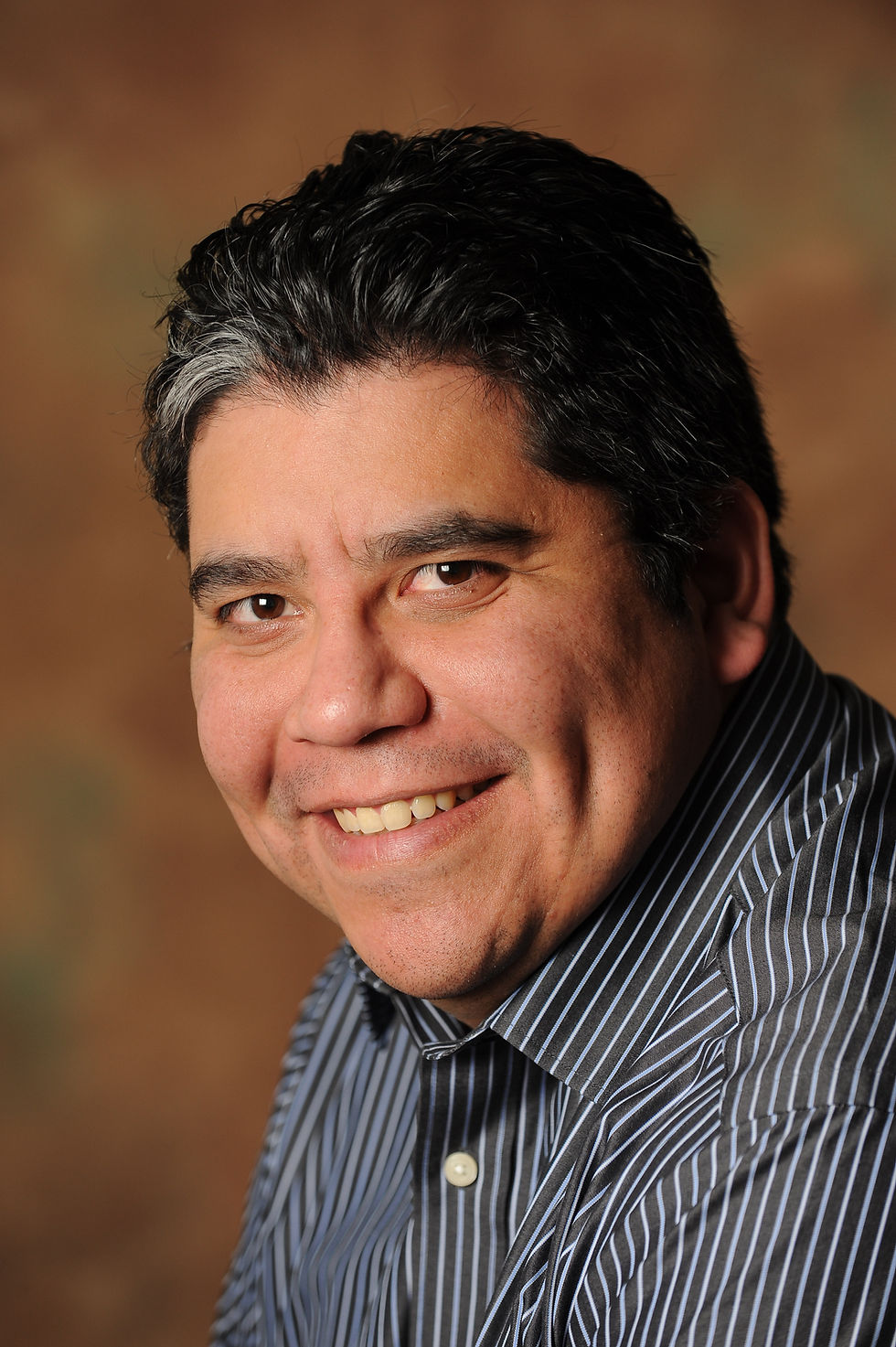
BM: It’s been a pleasure, thanks for much for this opportunity. You can visit my website: birchbarkcomics.com
Insta: @writerbrandonmitchell
youtube: @nigwegcollective3207
Wela’lin!

Like what you've just read? Help us keep the Yeti Cave warm! Comic Book Yeti has a Patreon page for anyone who wants to contribute: https://www.patreon.com/comicbookyeti


