


BOUNDLESS Conversation with MIKE SALSBURY

Interviews Editor, Andrew Irvin, meets with Mike Salsbury to talk Boundless and beyond.
COMIC BOOK YETI: Mike, it’s a pleasure to have you into the Yeti Cave! How are things going in Florida at the moment?

MIKE SALSBURY: Pretty good! I've been surfing whenever I get the chance, and we're finally getting to that time of year when Florida isn't unbearably hot. That's always a welcome change.
CBY: I imagine the winters aren't too harsh down in Florida, and probably getting milder given the way things are trending. I know we’ve come together to chat primarily about Boundless, presented through Webtoons, with volume #1 available as a digital graphic novel on Gumroad. Can you share a bit about the origins of this title and how it has evolved since you began working on it?
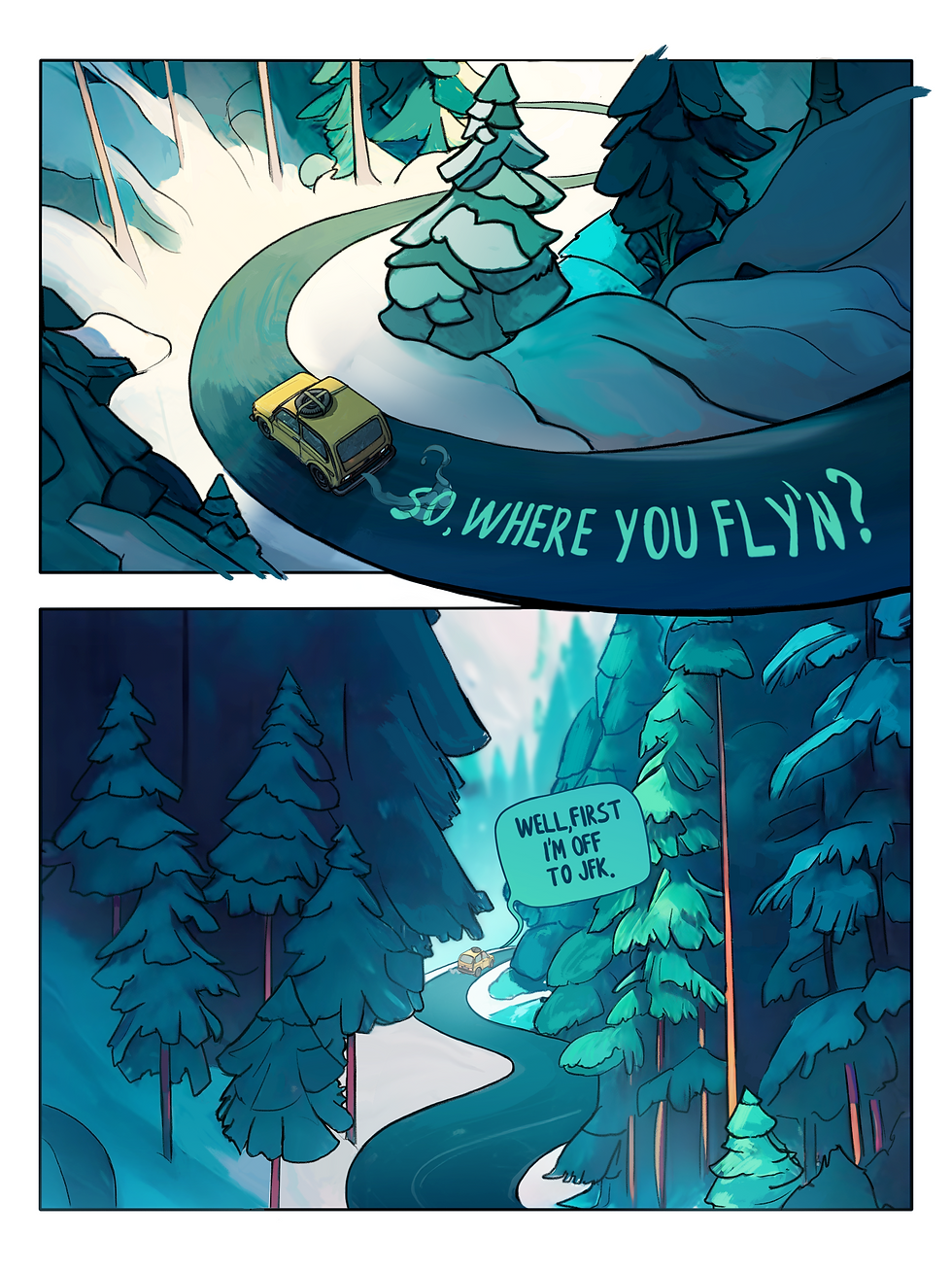
MS: Boundless started as a sketch of two characters while I was working a desk job. Someone asked me about them, and I realized I didn't really know their story yet. That question sent me down a path of discovering who they were and what their lives might look like. They became Rudy, a fox forced into hiding, and Emily Hopkins, who joins his journey to find his family. At its heart, it's an adventure about belonging and finding your place in the world.
Around COVID, I started sharing the story on Instagram and Webtoons, and it gained some momentum. Eventually, I stepped away from the constant cycle of posting and finished the book privately. The first volume is now complete and available digitally. I've always imagined Boundless as a trilogy, though I'm focusing on other creative opportunities for the moment.
I sometimes call it my first pancake. I learned an enormous amount from making it, not just about drawing comics, but about carrying a story all the way through to the end.
CBY: Getting it off the griddle in one piece takes a mixture of different ingredients and patience with your process, so I think that's an apt analogy. Can you tell us a bit about the different formats for Boundless? What does the digital publication offer that isn’t available on Webtoons, and how do you plan on expanding distribution and publication of the comic going forward?
MS: Webtoons was where I shared Boundless as it developed, while the digital volume on Gumroad lets readers experience the completed work as a graphic novel, in the page format I originally designed.
It's still available to anyone who wants to read it, but I'm not putting a huge amount of energy into marketing it right now. I'm focused on other creative work, and I think there's value in allowing a project some room to breathe. A story doesn't necessarily get only one moment. I'd love for Boundless to find a wider audience down the road, perhaps through opportunities I can't quite predict today.

CBY: Right, Boundless isn’t your only project underway. You’ve got titles like The Path to Zinji and Hesper & The Akshapa in development. Can you share with our readers a bit about your portfolio and how your efforts to create narrative worlds overlap, if they intersect in any way?
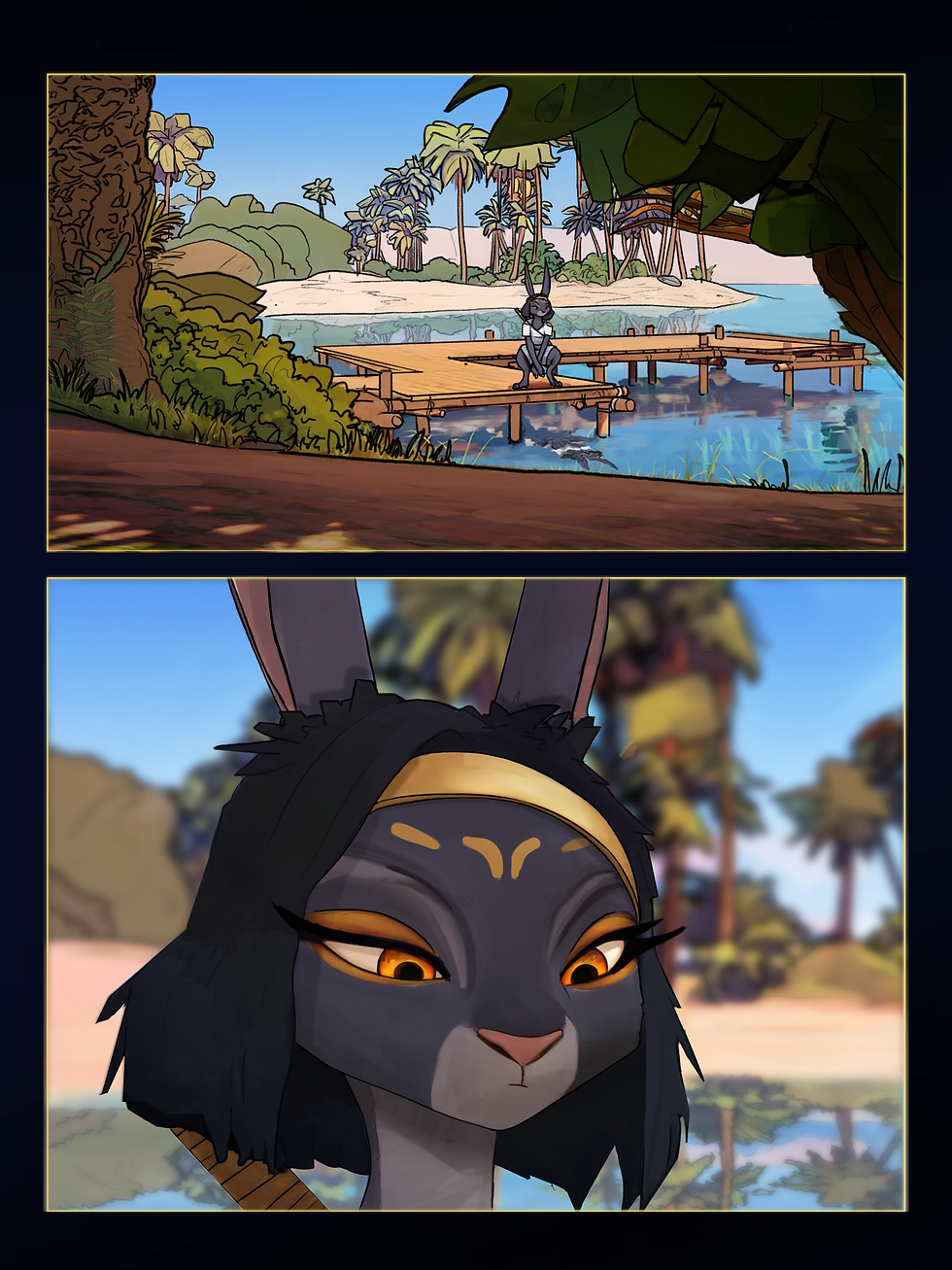
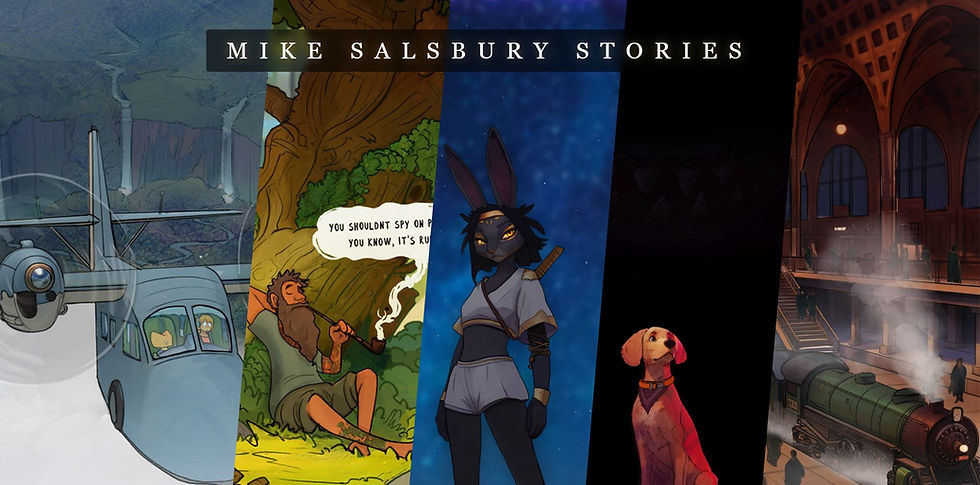
MS: Each project lets me explore something different that fascinates me. Boundless is about belonging, which probably reflected where I was in my own life when I started it. The Path to Zinji is a globe-spanning adventure about relationships in all their forms: family, friendship, romance, mentorship and rivalry. It gives me room for humor, heartbreak and everything in between.
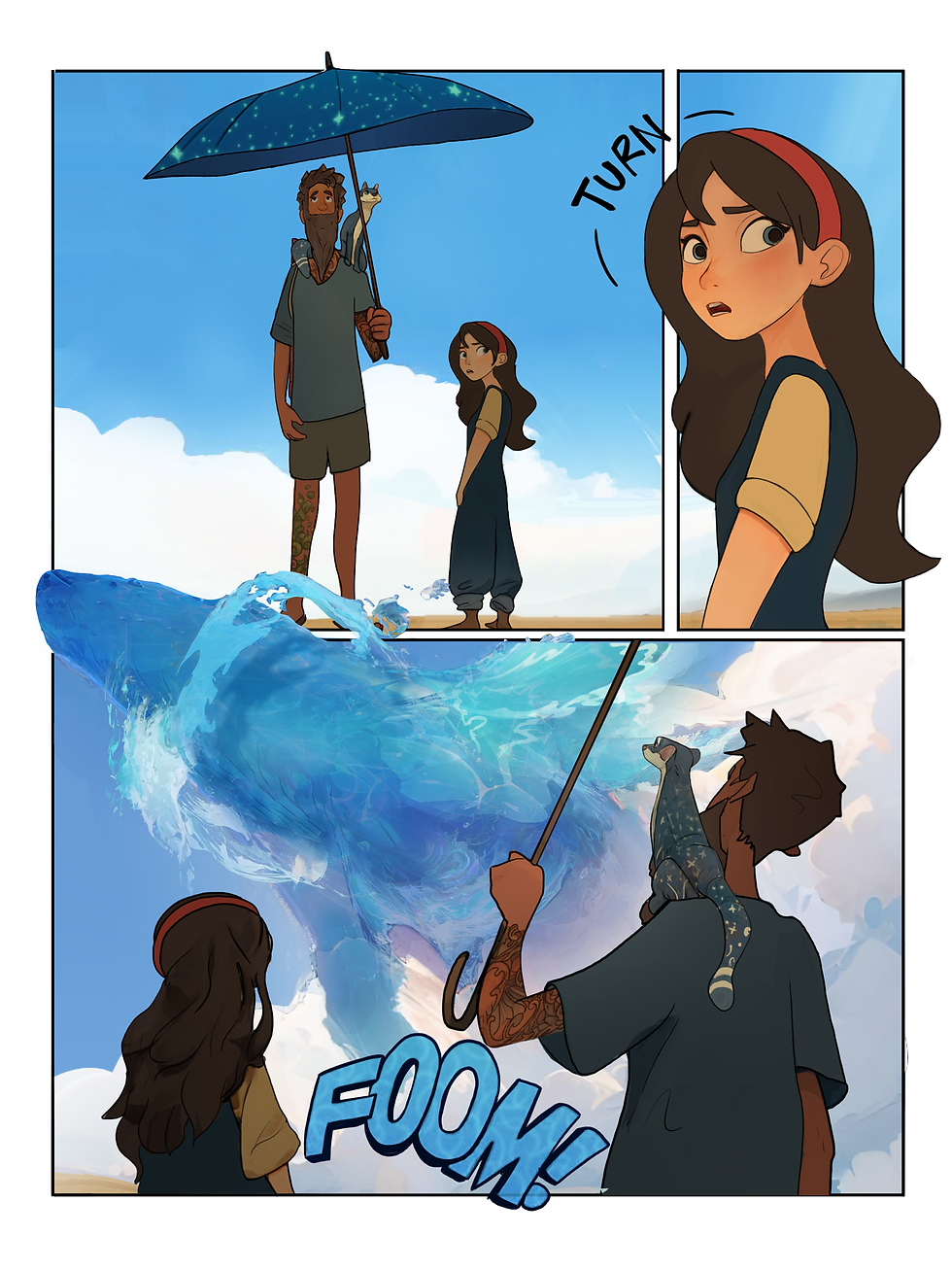
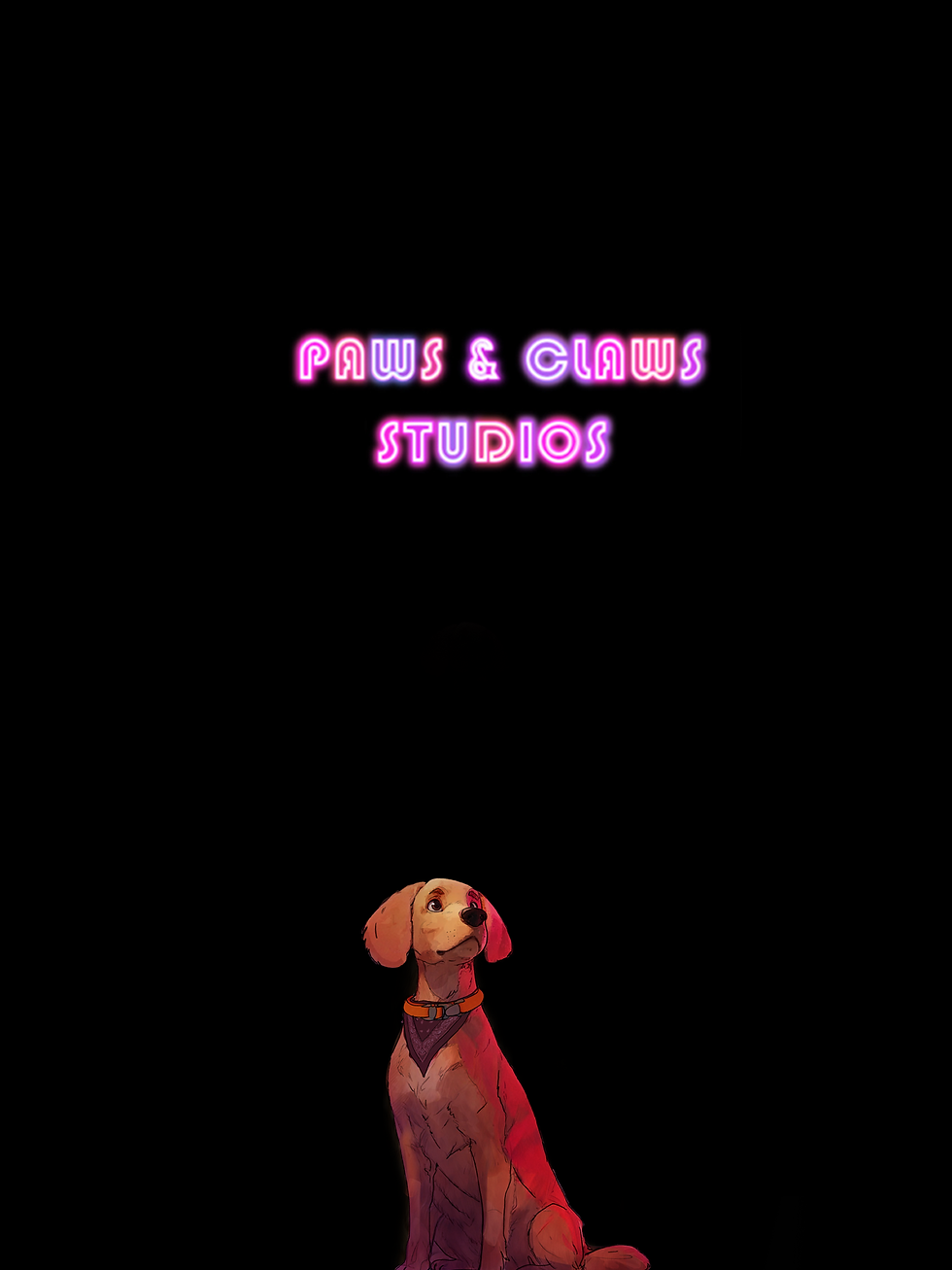
Hesper & The Akshapa is more of a creative playground, where I can experiment with strange magic and ideas I wouldn't necessarily try elsewhere. Tanthra is about building an enormous fantasy world that feels lived-in and real, even when its people and cultures are fantastical. And Paws and Claws is a psychological horror game set in the late 1980s, experienced from the perspective of a golden retriever.
The worlds don't literally overlap, but my interests as a storyteller do. Comics, novels, games and music are different ways to tell stories. I started out thinking of myself as an artist; increasingly, I think of myself as a storyteller. And each project has to be fun for me to explore. If I'm not having fun with it, I can't expect the audience to.
CBY: I haven’t properly utilized the vertical scrolling format that Webtoons employs. How do you incorporate the spacing in the scroll for pacing elements, and in what way do you find it differs from employing the gutters in print comic formatting?
MS: I actually haven't designed a comic specifically for the vertical scrolling format. I've always approached the work as a traditional graphic novel first, thinking about the pacing, composition and panel arrangements on a page. If I put it on Webtoons, I adapt those pages for scrolling rather than build the story around scrolling from the outset. So I can't claim to have mastered the particular rhythm of that format. My instincts are still very much rooted in the printed page.
CBY: I know you’ve mentioned Bill Watterson as an influence (and I can see it most clearly, I think, in how you draw your vehicles moving along, which I adored). Who else factored into your formative understanding and appreciation of comics?
MS: Art Spiegelman was a huge influence. Maus was the first graphic novel I ever read, and it changed my sense of what comics could do. It's one of the few graphic novels I'd confidently hand to someone who doesn't read comics at all, knowing the story could still completely pull them in. It showed me how much emotional and literary weight the medium could carry.
Bryan Lee O'Malley was another big one, particularly Seconds. I'd already been thinking about making a graphic novel, but when I finished that book, something clicked. I remember thinking, 'I want to make something like this.' Along with Bill Watterson, those are probably the three creators who most shaped my early appreciation of comics.
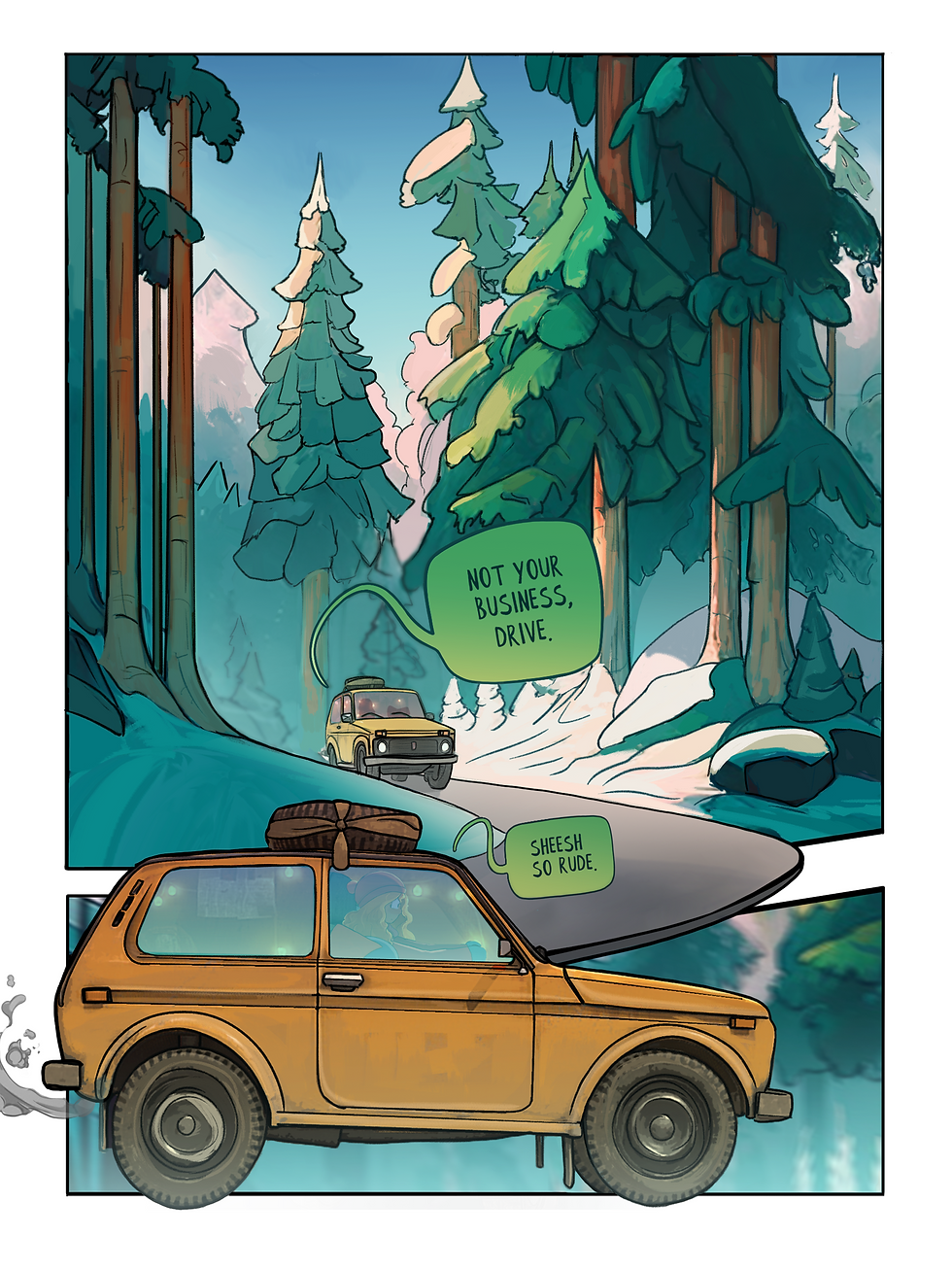
CBY: Good company to keep, for sure! I also notice you’ve got a lot of really involved background work - particularly architectural and landscape elements. What does your illustration process look like, in terms of tools, techniques, and reference material, to help you achieve the look of Boundless?
MS: My process has changed a lot since Boundless, but I've always started with environments. I studied environment design at CGMA (Computer Graphics Master Academy), rather than character design, so architecture, landscapes and the spaces people inhabit came more naturally to me. With Boundless, I'd usually start with reference material for a setting, draw the environment, and then work out where the characters belonged in it.
Now, after the script has gone through editorial revisions, I build environments in Unreal Engine. That lets me move around a location like a cinematographer, finding camera angles, lighting and compositions before I bring the images into Photoshop to paint over them and add the characters. I think much more about color palettes and key frames now, almost as though I'm directing a film.
The great thing about building a space in 3D is that I can revisit it from another angle without inventing and redrawing the whole background from scratch. I also save a lot of the detailed cleanup for a later pass, so I can keep the flow of the story moving before getting bogged down in the finer work.
CBY: That explains a lot about the distinct style your work has - I ask technical questions of artists a lot, and few in the comics community are using Unreal Engine like that. Regarding multimedia presentation of your material, I also notice on your Youtube channel, you’ve included a variety of songs for an original soundtrack to Boundless, among other tracks. Can you tell us a bit about your musical background, the composition process, and how you arranged and recorded everything?
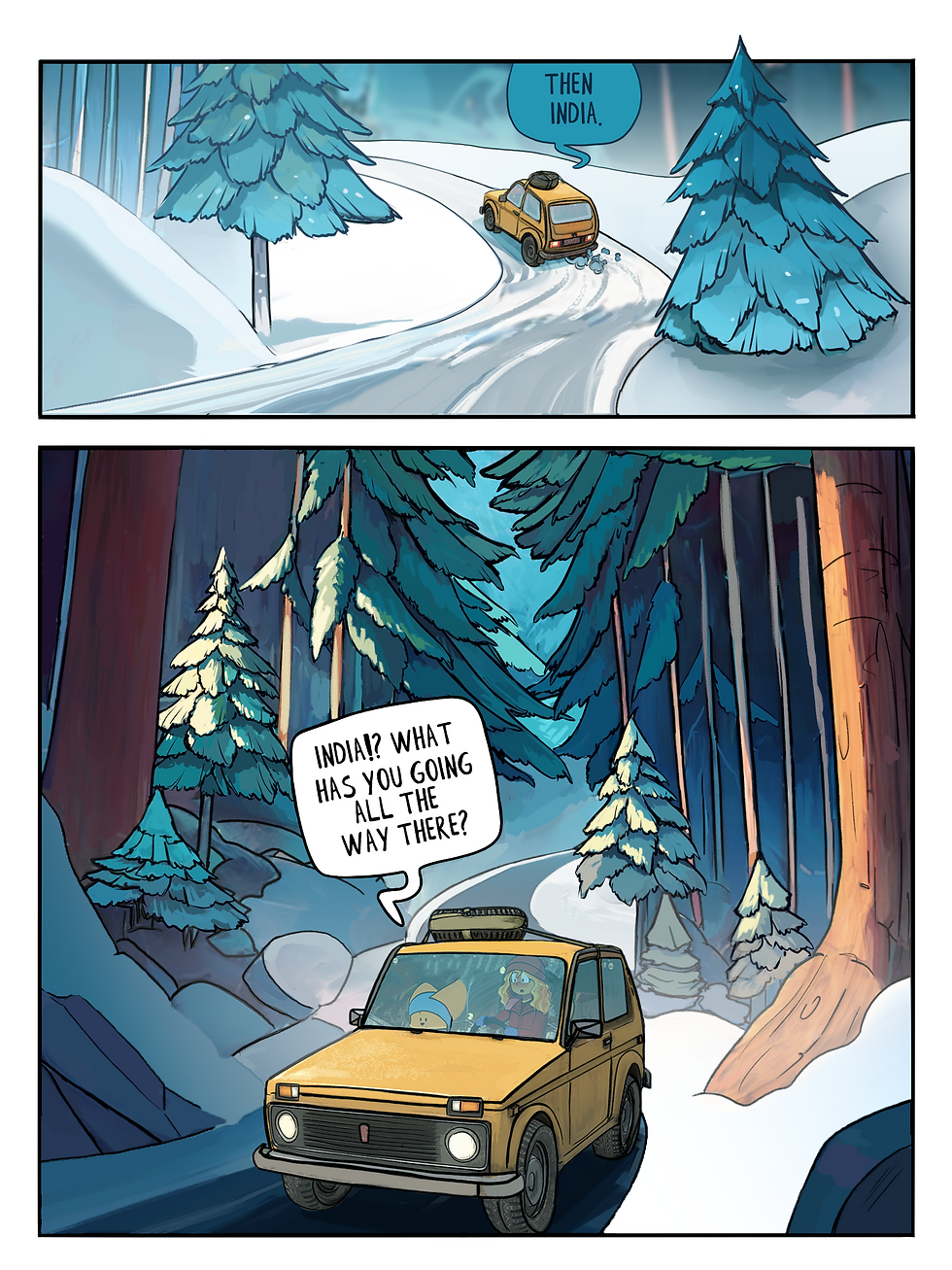
MS: I played in a band in college, and later spent time recording an album in a studio. That gave me my first hands-on experience with producing, arranging and recording music. Even after I stopped playing in bands, I wanted to keep music in my life.
I've always loved soundtracks and the way music can become tied to a story or character. So I started composing music for Boundless, initially just as a hobby. It grew into a much bigger project, including the main Boundless theme, which was recorded by musicians around the world contributing their parts from their own studios. There's a video of that international Boundless Orchestra on my YouTube channel.
It was a dream project, and it cost me more than I'd care to admit, but I'm glad I did it. The music has a lot of heart, and I think it belongs with the book. People who've followed Boundless closely often know the soundtrack, too. I haven't been making much music lately, but I'd love to return to it.
CBY: As a multifaceted creator, what sort of tasks do you prefer, where you can find your flow? Does writing or drawing bring you greater joy? Conversely, which elements of working in comics do you find most laborious?
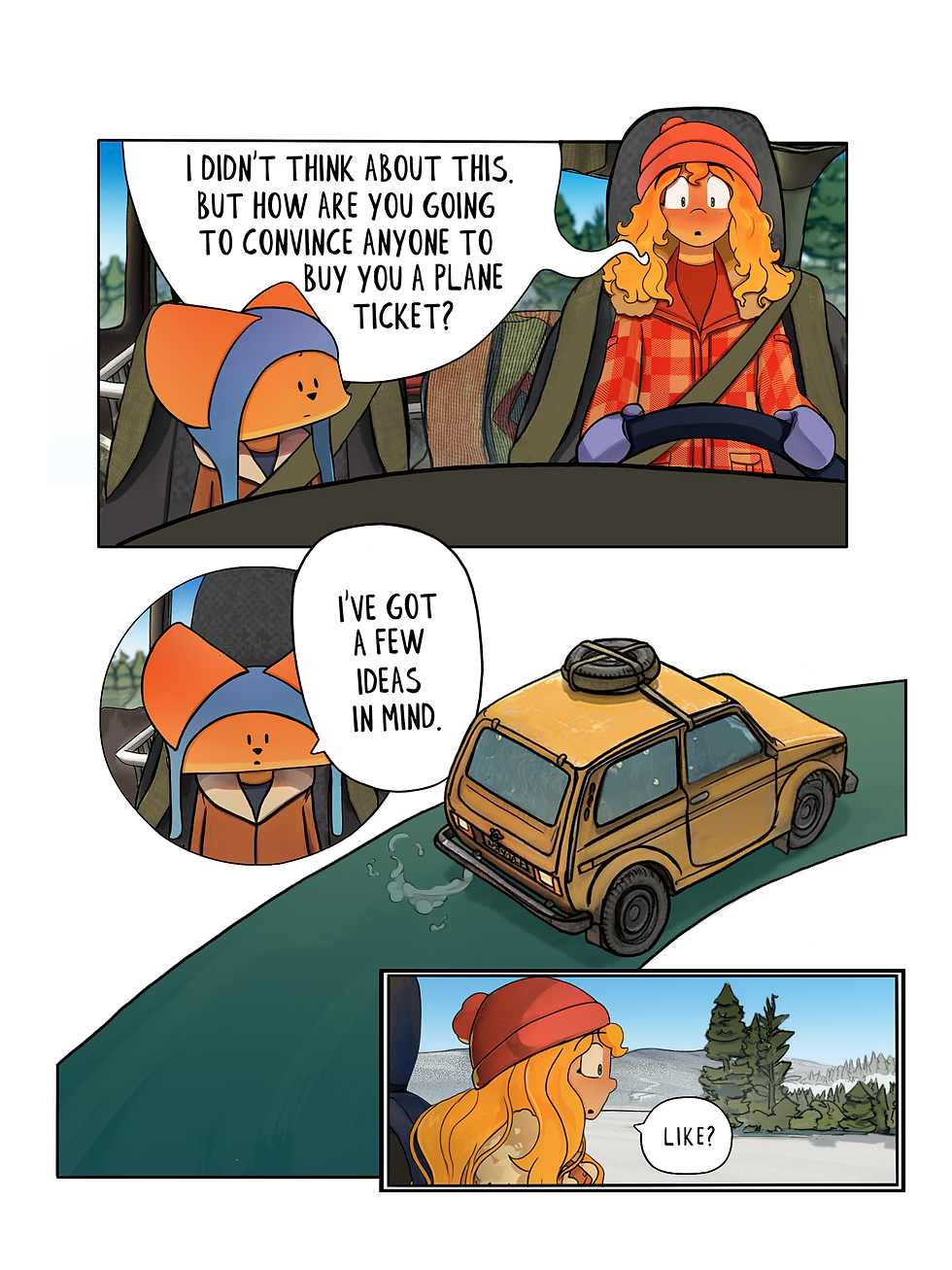
MS: The part I enjoy most is imagining what comes next. I love painting a grand landscape or finally drawing a character the way I've seen them in my head for years. For a long time, my imagination was ahead of my technical ability, and I'd have to settle for something that wasn't quite what I envisioned. Getting closer to that picture is incredibly satisfying.
But these days I can lose myself just as easily in thinking about a scene while I'm lying in bed, or figuring out the relationships between characters: how they're different from one another, how they're alike, and sometimes how they're like me. That's where I find my flow.
The hardest parts are usually the monotonous cleanup tasks: panel borders, speech bubbles, stray lines, and all the little things you have to straighten out after making a mess for yourself. Readers may never consciously notice them, but those details still add up to the experience of a page.
CBY: I know publications often include acknowledgements and credits to those involved in bringing work to the public. Having spoken about your auteur role in your approach to your comics, do you have people who support your creative process that you’d like to shout out now? Who has helped you in your career journey that merits mention here?
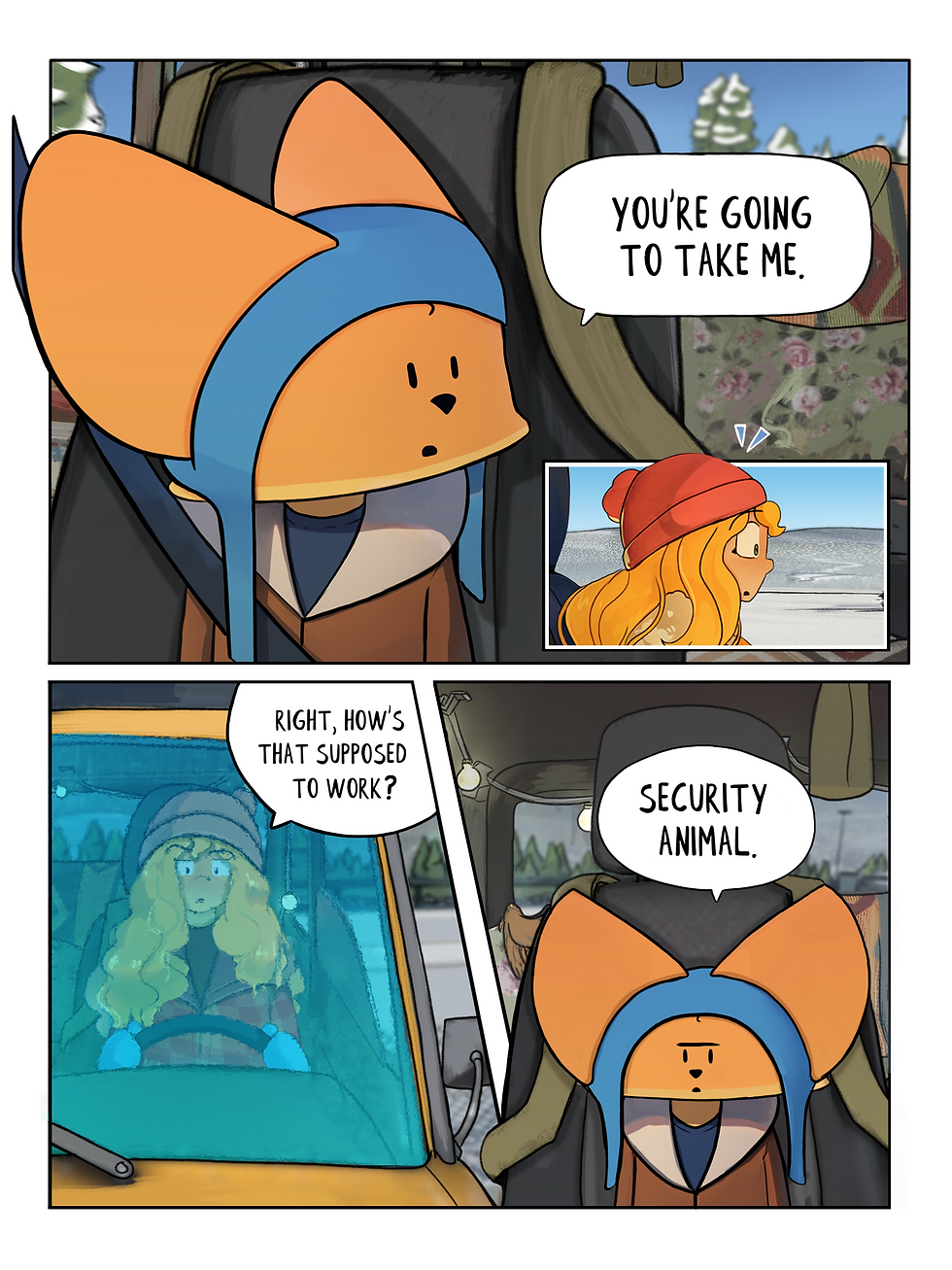
MS: I'd love to mention Chris Staros at Top Shelf Productions and IDW, who I've been working with as my editor. Every time we work through a chapter, I feel like I grow as a storyteller. One thing I've learned from him is to be a servant to the story. It's one thing to care about something you've made; it's another to be willing to do what's best for the characters and the story itself. I really appreciate that perspective.
I'd also like to thank my wife, Emily, for her patience and support. Living with someone who's this passionate about comics and imaginary worlds probably takes a special kind of patience! And, of course, my family, who've supported me along the way.
CBY: To close, we offer a moment for guests to share unrelated work that has been inspiring lately. What other comics, films, music, literature, and other work should our readers check out?
MS: I've become a big admirer of Josiah Bancroft. His Books of Babel series and The Hexologists are fantastic. He has a way of creating strange, imaginative worlds that still feel wonderfully real, and his work hits a lot of the notes I hope to find in my own stories.
Neil Gaiman is another favorite. I love that playful sense of imagination in his writing. Neverwhere was a more recent discovery for me, even though the book itself has been around for years.
I'm actually a pretty picky reader, so I'm always hunting for something that feels genuinely creative or unexpected. I'm very open to recommendations!
CBY: Gaiman certainly had his place on my bookshelf growing up (not so much these days), but I never checked out Bancroft's work. Mike, thanks for joining us today! If you have any additional portfolio, publication, and social media links to share, we certainly welcome them.
MS: Thanks again for having me! You can find my work here:
Website: https://www.mikesalsburystories.com
Instagram: https://www.instagram.com/mike__salsbury
Like what you've just read? Help us keep the Yeti Cave warm! Comic Book Yeti has a Patreon page for anyone who wants to contribute: https://www.patreon.com/comicbookyeti


